Slyce
Software Development · Web Development
Project overview
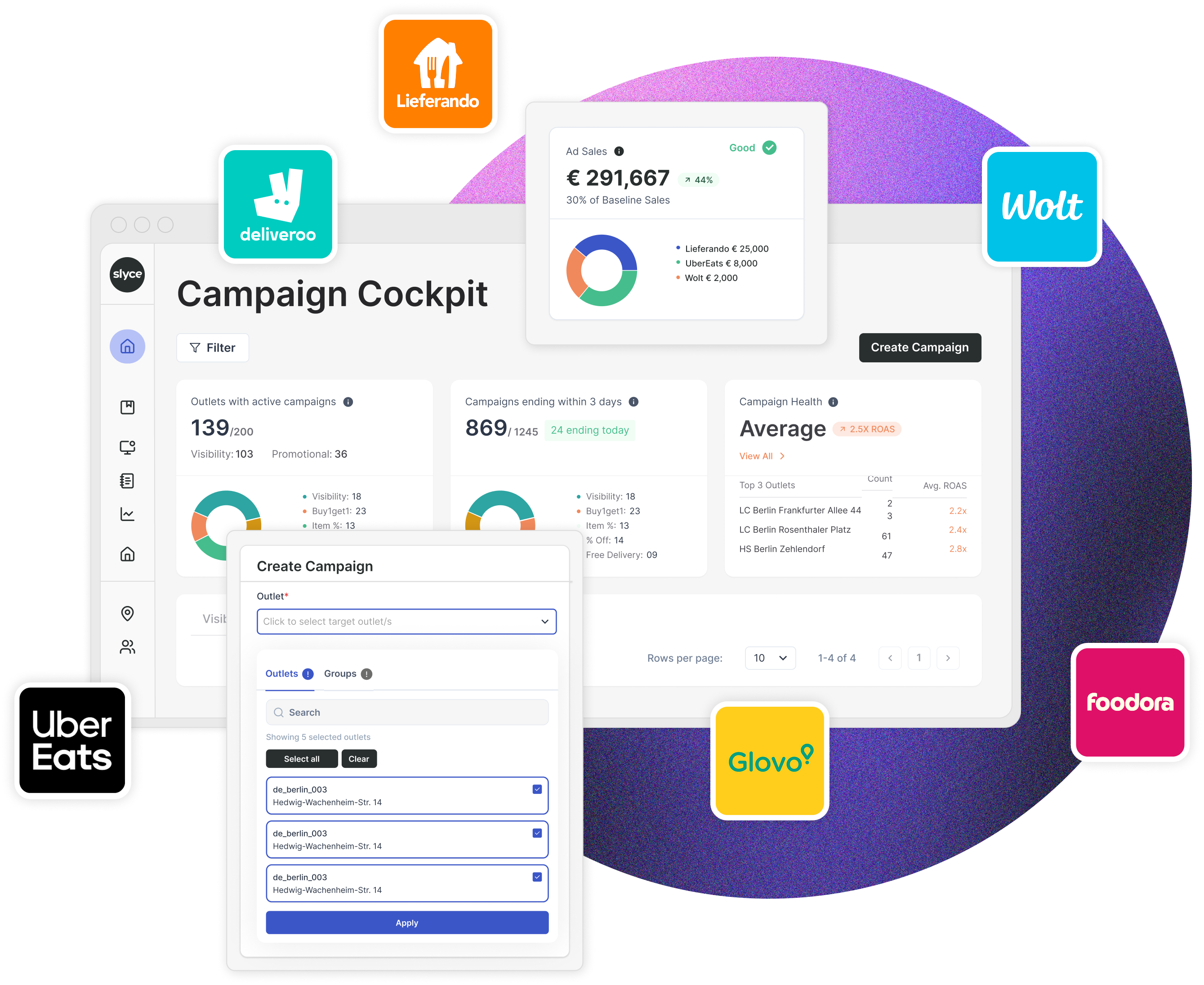
Slyce is a Berlin company that runs marketing and operations for restaurants selling through delivery apps. More than 3,500 restaurants use it, including brands such as Burger King, Domino's, Hans im Glück, Dunkin' and Loco Chicken. From one interface, a chain can launch ads and promotions on every delivery platform, see what each euro of marketing spend brings back, and get alerted the moment an outlet goes offline or its ratings drop.
For the past two years, I've worked with Slyce as a contract full-stack engineer, building across the web app, from the screens restaurant teams use every day to the backend, platform connections and cloud infrastructure behind them. I also look after the company website. Slyce's data-science team builds the models behind its automated campaigns; my part is the product that puts them in restaurants' hands.
At a glance
Client: Slyce GmbH, Berlin, Germany
Industry: Food Delivery, Restaurant Marketing & Analytics
My role: Contract Full-Stack Engineer
Scope: Web app (frontend and backend), delivery-platform integrations, data and cloud infrastructure, and the company website
Timeline: 2 years, ongoing
Tech stack: Next.js, React, TypeScript, PostgreSQL, Google Cloud, Webflow
Impact
1 interface for multiple delivery platforms, including Lieferando / Just Eat, Uber Eats, Wolt and Deliveroo
Ads and promotions of every common type, from paid visibility to free delivery and buy-one-get-one
Incremental sales and profit shown for every campaign, platform and store
Trusted by 3,500+ restaurants
The problem
A restaurant chain on six delivery apps is running six businesses at once
Every delivery platform has its own portal, its own campaign types, its own rules and its own reports. A chain with hundreds of outlets on several platforms has to set up and adjust promotions outlet by outlet, platform by platform, and then piece together whether any of it paid off.
Manual, repetitive work: Creating, editing and ending campaigns across hundreds of outlets and several portals takes whole teams.
No single source of truth: Sales, ad spend, rankings and ratings sit in different portals, in different formats, so comparing platforms is guesswork.
Things change behind your back: Platforms adjust or end campaigns on their own, so what a chain thinks is running and what is actually live drift apart.
Lost orders go unnoticed: An outlet that's offline, a menu item that's switched off or a wave of bad reviews costs money every hour, and nobody sees it until the weekly report.
The approach
Slyce had to hide all that platform complexity behind one simple workflow, while staying in step with what each platform is really doing. Four principles guided my work:
One workflow, many platforms. A campaign is set up once in Slyce, and the differences between platforms are handled behind the scenes.
What you see is what's live. The campaigns, prices and opening hours shown in Slyce should always match what customers see in the apps.
Show the money. Every campaign should answer the question restaurants care about: how much extra did it sell, and was it worth it?
Built to run unattended. Restaurants rely on Slyce around the clock, so everything is automated, monitored and released safely.
What was built
Campaigns on every delivery app, from one place
Restaurant teams create, edit, pause and end ads and promotions for all their platforms from the same screens, from paid visibility to free delivery, item discounts and buy-one-get-one offers. Campaigns can target single stores or whole groups, run on schedules and work to a budget.
I built large parts of these flows end to end, from the forms and campaign tables restaurant teams work in to the backend that turns each campaign into exactly what a platform expects. I added new campaign types platform by platform, brought in campaigns restaurants had already set up directly in the portals, and built bulk campaigns that roll one setup out across hundreds of outlets at once.
Smart campaigns that prove their worth
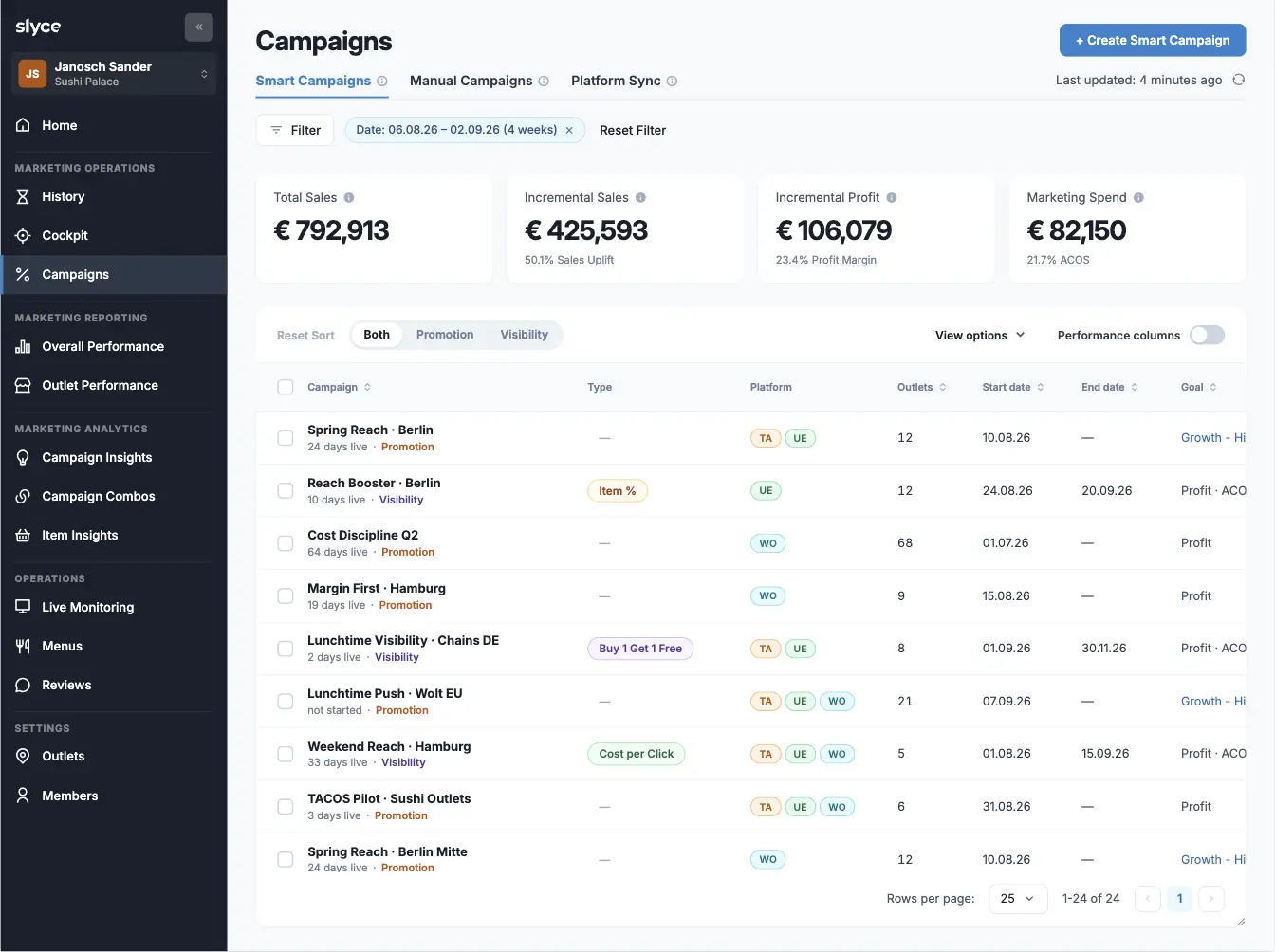
With smart campaigns, restaurants set a goal, such as growth or profit, and Slyce manages the campaigns for them. I build the product around Slyce's models: the screens where restaurants create and follow smart campaigns, the scheduling that keeps them running on time, and the budget limits and safeguards that keep spend under control.
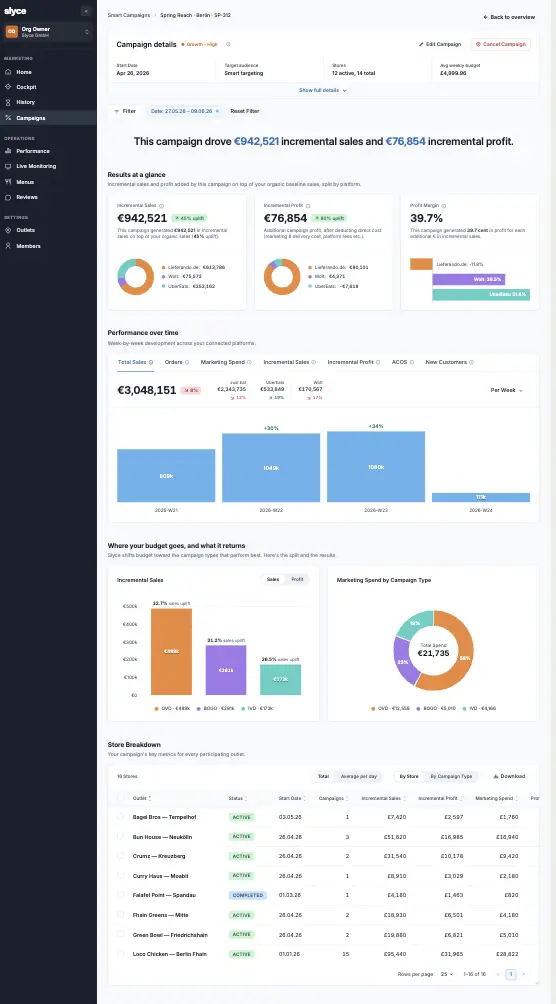
Each smart campaign has its own results page that answers one question first: how much extra did this campaign sell, and how much extra profit did it make? Below that, restaurants see the results by platform, week by week, by campaign type and for every single store.
Always in step with the platforms
Behind every change in Slyce is a request to a delivery platform, and platforms sometimes reject changes, take a while or adjust campaigns on their own. I worked on the parts of Slyce that track every campaign through these steps, regularly compare what's in Slyce with what's live on each platform, and fix any difference automatically, so restaurants never act on outdated information.
Data from every platform, in one place
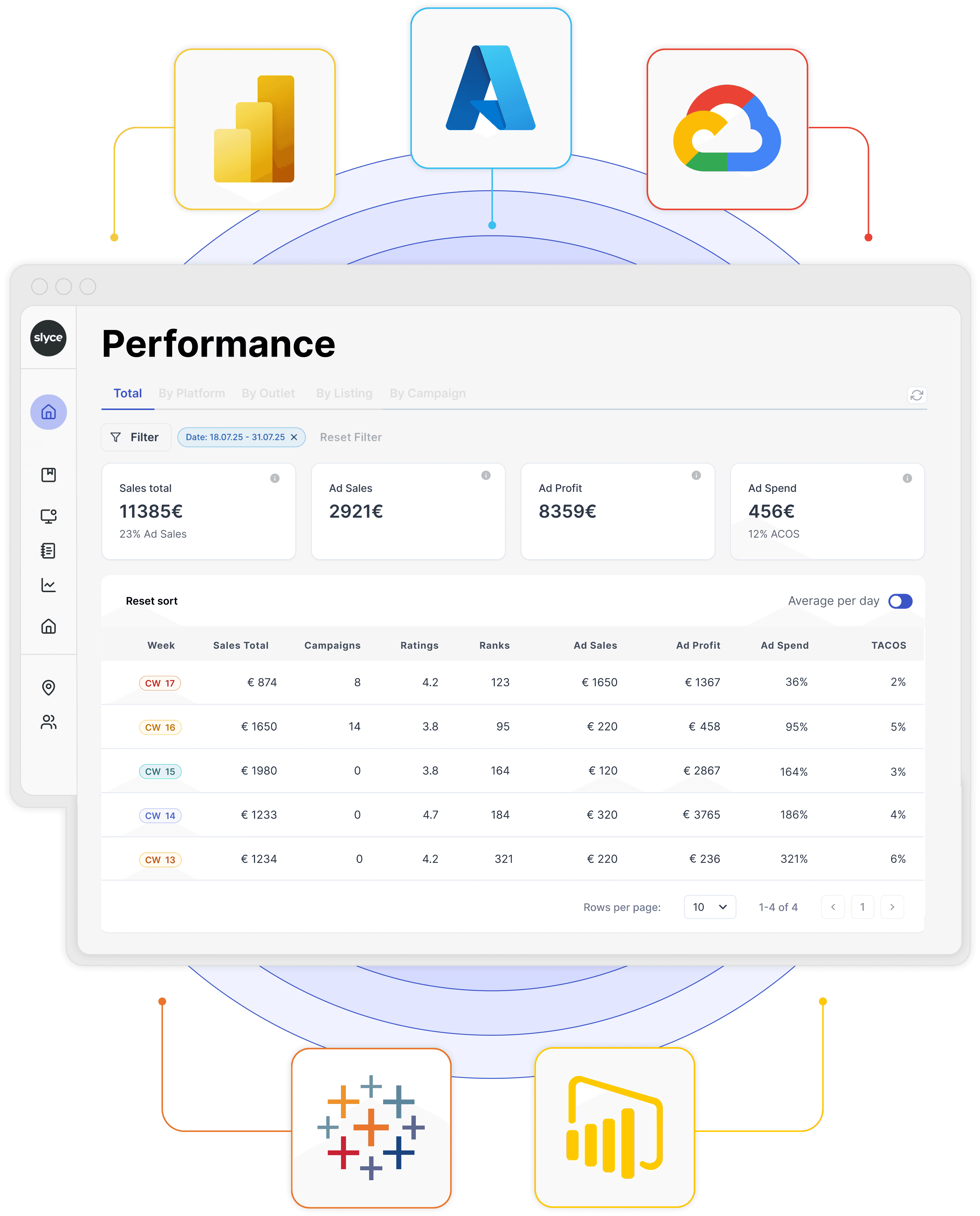
Slyce's reports and automation run on data gathered from all the delivery platforms around the clock: sales, orders, cancellations, store availability, opening hours, menus, ratings and competitors' menus. I built and extended many of the connections that collect this data, so restaurants can compare platforms side by side in Slyce or in their own reporting tools.
Live monitoring for store operations
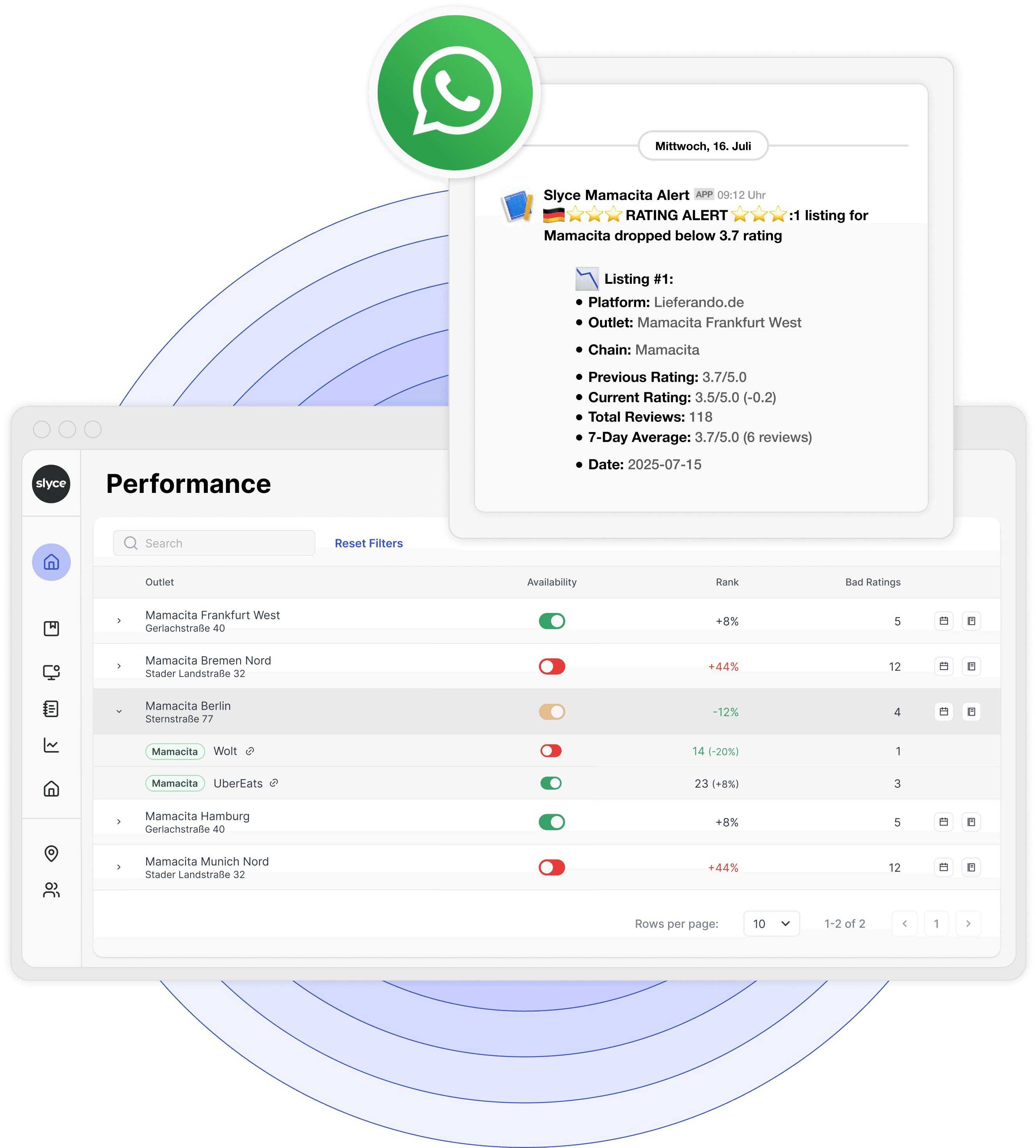
Operations teams need to know about problems while they can still fix them. I worked on Slyce's live-monitoring features: an incidents view that groups review problems by type, store status with a reason for every closure, opening and holiday hours kept in sync with each platform, and menu items and add-ons that can be switched on or off directly from Slyce.
Secure, reliable and always on
Many restaurant groups share one application, and each must see only its own stores and data. I worked on access control, team roles, sign-in and password security, and gradual rollouts that let Slyce release new features to selected customers first. Behind the scenes, I help run the cloud infrastructure, monitoring and automated release process that keep Slyce available around the clock.
The company website
Alongside the product, I look after slyce.io, Slyce's marketing website, built in Webflow, so the story customers read matches what the product actually does.
Results
Over two years, Slyce has become a single place where restaurant chains run marketing and operations across all the major delivery apps, and I've helped build much of what sits between the restaurant and the platforms.
One workflow for every platform. Restaurants launch and manage campaigns everywhere from one place, instead of logging in to each portal.
Results restaurants can trust. Every campaign shows the extra sales and profit it brought in, by platform and by store.
Problems caught early. Store availability, opening hours, menus and ratings are monitored around the clock, with alerts when something needs attention.
Results for restaurants. Slyce's published case studies report gains such as +30% sales for Loco Chicken across 300+ outlets and +88% sales for Dunkin' in the Netherlands and Belgium.
Have a project like this?
Let's talk ↓